
Bathroom storage is a constant battle, especially in smaller homes where every square inch counts. A cluttered sink, jars spilling across shelves, and nowhere to stash daily essentials can turn your morning routine into a frustrating scramble. That’s where smart bathroom mirror storage solutions come in. By combining reflection with function, bathroom mirror storage transforms wasted wall space into organized zones for everything from medications to skincare products. Whether you’re working with a tight powder room or a sprawling master bath, there’s a mirror storage solution that fits your needs, budget, and style.
Table of Contents
ToggleKey Takeaways
- Bathroom mirror storage solutions like medicine cabinets and floating shelves transform wasted wall space into organized zones, eliminating the need for bulky furniture and freeing up counter space in small bathrooms.
- Standard bathroom mirrors are positioned 60-66 inches from the floor to the center line, which helps you plan additional shelving proportionally and ensures your bathroom mirror storage feels intentional rather than cramped.
- Mirrored medicine cabinets come in recessed (fitting between wall studs) and surface-mount options, with each holding 25-50 pounds across 2-3 adjustable shelves, accommodating medications, skincare, and daily essentials.
- Floating shelves require proper mounting into studs with lag bolts or heavy-duty toggle anchors rated for at least 50 pounds each, spaced 16 inches apart to align with wall framing and prevent moisture-related failures.
- Budget-friendly bathroom mirror storage hacks like adhesive-mounted shelves, over-the-mirror racks, and corner shelves offer temporary solutions for renters and small bathrooms, though they work best for lightweight items under 15 pounds.
- Organizing mirror storage by category—daily items on top shelves, medications in the middle, occasional items lower—combined with clear containers and labels ensures functionality and makes your morning routine faster and more efficient.
Why Bathroom Mirror Storage Is a Game-Changer for Small Spaces
The bathroom mirror is already doing one job, reflecting your face. Why not make it work harder? Bathroom mirror storage eliminates the need for extra furniture, frees up counter space, and keeps everyday items within arm’s reach without cluttering the vanity.
For homeowners with tight bathrooms, this is huge. That 30-inch medicine cabinet above the sink does the work of a full linen closet. You gain counter real estate for your soap, toothbrush holder, or a simple plant. Plus, when guests visit, everything’s hidden behind closed doors or neatly tucked away on floating shelves.
Building codes don’t regulate mirror storage, but standard bathroom mirrors sit 60-66 inches from the floor to the center line, measured from the finished floor. Knowing this helps you position additional shelving or cabinets proportionally so everything feels intentional, not crammed. Strategies like Storage Solutions Techniques: Smart Ways to Maximize Your Space apply directly here, vertical thinking turns unused wall into functional zones.
Mirrored Medicine Cabinets: The Classic Combo Solution
A mirrored medicine cabinet is the most straightforward bathroom mirror storage option. You get a mirror, hinged doors, and interior shelves, all in one unit. Recessed models fit between wall studs (typically 16 inches on center), while surface-mount options sit flush against the wall with a depth of 4-6 inches.
When choosing a cabinet, measure your wall width and height first. Standard recessed cabinets come in widths of 16, 20, 24, and 30 inches to match stud spacing. If your bathroom framing doesn’t align perfectly, a surface-mount cabinet avoids the need to cut into the wall. Surface mounts don’t require studs, they attach with heavy-duty anchors rated for at least 100 pounds per anchor, depending on the cabinet’s weight.
Installation is straightforward for surface-mount models: find studs with a stud finder, mark the location, drill pilot holes, and secure with wood screws. For recessed cabinets, you’ll need to cut drywall between studs, which means some drywall patching on the sides. Wear safety glasses and a dust mask when cutting drywall.
The interior usually includes 2-3 adjustable shelves, each holding 25-50 pounds depending on construction. That’s room for medications, skincare, dental products, and toiletries without overcrowding. Modern medicine cabinets also come with integrated LED lighting, convenient for late-night routines and grooming.
Floating Shelves Around Your Mirror for Stylish Display Storage
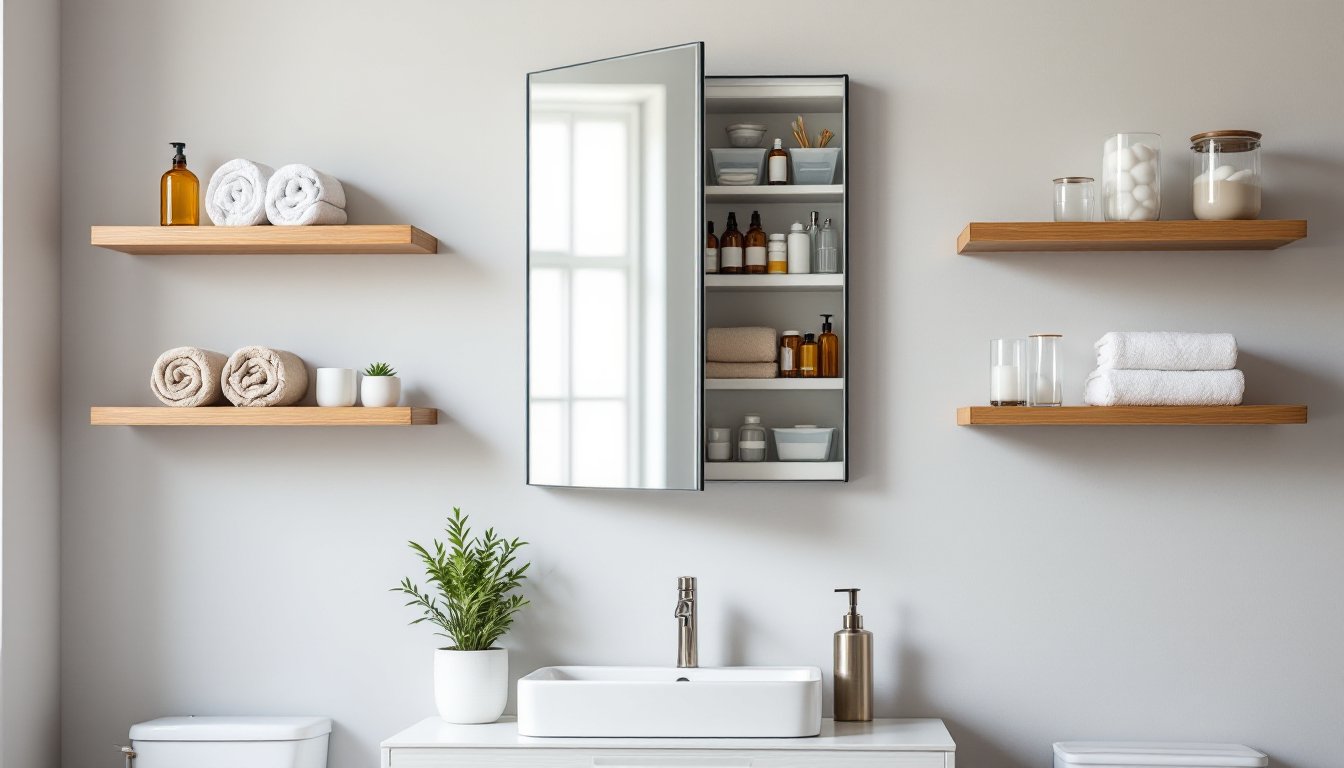
If you like an open, airy aesthetic, floating shelves flanking or above the mirror let you display storage while keeping the mirror’s function intact. This approach works especially well in larger bathrooms where you have wall space to spare.
Floating shelves typically come in lengths of 24, 36, or 48 inches and depths of 8-12 inches. Weight capacity varies, standard shelves hold 25-50 pounds, but heavy-duty options with proper anchoring can support 75+ pounds. Always mount floating shelves into studs using lag bolts or into the wall with heavy-duty toggle anchors rated for at least 50 pounds each. Never rely on drywall anchors alone for bathroom storage: moisture and vibration can loosen them over time.
To install floating shelves, use a level to mark mounting points precisely. Space brackets 16 inches apart (to align with stud spacing) or closer for better weight distribution. Drill pilot holes to avoid splitting wood and to ensure accurate placement. Once mounted, style with rolled hand towels, small glass jars, and a few plants, organization that doubles as decor. Resources like Remodelista showcase how layering textures and heights on open shelving creates visual interest while keeping essentials accessible.
Recessed Mirror Cabinets: Hidden Storage Behind the Glass
A recessed mirror cabinet sits flush with the wall surface, no protruding frame, no wasted depth. These work best when you’re willing to do a bit of structural work and have access to the wall framing behind the mirror.
Recessed cabinets must be installed during framing or when you’re willing to cut out drywall and adjust studs. The cabinet box fits directly into the wall cavity, with the mirror flush to the finished wall. Depth is typically 4 inches, shallow enough not to interfere with plumbing or electrical runs behind the wall.
Before cutting, use a stud finder to locate framing and a moisture meter to check for damp spots that suggest hidden pipes or leaks. If you find water damage, fix the source before proceeding. Mark the cabinet outline on the drywall and carefully cut between studs using a drywall saw. Install the cabinet frame, secure it to the studs with screws, and finish the edges with drywall tape and compound.
The interior is where recessed cabinets shine: deep shelves hold more than surface models, and everything stays completely hidden behind the mirror’s reflective surface. This is ideal if you prefer minimalist bathroom aesthetics. Installation is a moderate DIY project, expect 2-3 hours if you’ve done drywall work before, or hire a handyperson if you’re unsure. Wear goggles and a dust mask during cutting and finishing.
DIY Mirror Storage Hacks: Budget-Friendly Installation Tips
Not ready to replace your mirror or commit to a full cabinet? Try these budget-friendly bathroom mirror storage hacks that work with what you have.
Adhesive-Mounted Shelves: If wall-mounted drilling feels risky, grab adhesive floating shelves rated for 10-15 pounds. These use heavy-duty 3M VHB tape or similar products and require clean, dry drywall. Wipe the wall with a dry cloth first, then press firmly for 30 seconds. Wait 24 hours before loading. These work best for lightweight items like cosmetics or rolled washcloths, not heavy glass bottles.
Over-the-Mirror Shelving Racks: Metal or wood racks that hook over the mirror’s top edge add shelving without hardware. They’re removable, rent-friendly, and handle 10-25 pounds depending on construction. Just ensure your mirror’s frame is sturdy enough to support the load.
Corner Shelves and Tension Rods: Corners often sit unused. Corner shelves fit snugly with minimal fasteners. Tension rods between the mirror and sidewall hold small baskets for cotton balls, q-tips, or rolled hand towels.
Wall Cabinets on Either Side: If replacing the center mirror isn’t feasible, flank it with small wall cabinets mounted at the same height. This distributes storage visually and avoids the “medicine chest” look. Mount cabinets into studs or use toggle anchors rated for at least 50 pounds each.
All adhesive products work better in dry conditions. If your bathroom gets steamy during showers, ventilate well and allow surfaces to dry completely before applying anything. Research on Real Simple emphasizes that proper prep, a clean, dry surface, is the difference between adhesive solutions lasting months versus days.
Organizing Bathroom Essentials Inside Your Mirror Storage
Once you’ve installed your bathroom mirror storage, organization makes or breaks usability. A jumbled medicine cabinet is just as frustrating as no storage at all.
Zone by Category: Reserve top shelves for items you reach for daily, toothpaste, deodorant, skincare. Keep medications and first-aid supplies on middle shelves where they’re accessible but slightly set back. Store occasional items (sunscreen, hair masks, nail clippers) lower or toward the back.
Use Drawer Dividers and Small Containers: Clear plastic bins, mason jars, or simple cardboard dividers keep loose items grouped. Cosmetics go in one, medications in another, dental care in a third. Small jars are great for cotton swabs, bobby pins, or extra toothbrush heads. Labels ensure everyone in the household knows where things live.
Keep Medications Safely Sealed: Store prescription and over-the-counter medications in original bottles with legible labels and expiration dates. A small locked box inside the cabinet protects medications from children or pets if needed. Never store medications in the shower, steam degrades pills and ointments over time.
Review and Rotate Seasonally: Every three months, pull everything out and toss expired products. Sunscreen goes up in summer, heavy moisturizers rotate in winter. This keeps the cabinet functional and prevents expired items from taking up space.
Sites like Homify offer visual inspiration for stylish organization, what works aesthetically also tends to work practically. When shelves are organized and labeled, your morning routine becomes faster, and guests feel your bathroom is intentionally designed, not cluttered.
Conclusion
Bathroom mirror storage is one of the highest-impact upgrades you can make without major renovation. Whether you choose a classic mirrored medicine cabinet, floating shelves, or a recessed cabinet, the key is matching the solution to your space, budget, and style. Start with measurements, be honest about your comfort level with installation, and don’t skip prep work, the difference between a storage solution that lasts years and one that fails in months comes down to proper mounting and surface prep. Your bathroom doesn’t have to feel cramped. A smart mirror storage setup turns wasted wall space into functional, organized zones that make your daily routine smoother and your bathroom feel intentionally designed.