
A bed is the centerpiece of any bedroom, but too often it’s just that, a platform for sleep. What if it could work harder? Bed bases with storage have evolved far beyond the flimsy underbed boxes you might remember. Modern storage bed bases combine solid construction, smart design, and real functionality to reclaim valuable square footage in rooms where every inch counts. Whether you’re furnishing a small apartment, a guest room that doubles as an office, or simply want to declutter your master bedroom, a bed base with storage offers a practical solution that doesn’t sacrifice style or comfort. This guide walks you through the options, benefits, and how to pick the right one for your space.
Table of Contents
ToggleKey Takeaways
- A bed base with storage integrates drawers, shelves, or lift-up panels to reclaim wasted space under your mattress, consolidating multiple furniture functions into one piece.
- Storage beds are ideal for small spaces and apartments, providing 2–3 cubic feet of hidden capacity equivalent to 20–30 storage boxes without adding extra furniture to your room.
- Choose between drawer-style beds for frequent access, lift-up beds for bulky seasonal items, or open shelving for decorative storage based on your actual needs and room dimensions.
- Quality matters: invest in solid construction with ball-bearing slides and sturdy hardware to avoid sagging, stuck drawers, or failing mechanisms that cost more to repair than initial savings.
- A well-built bed base with storage typically costs $300–$1,500 depending on materials and features, and can serve your bedroom for a decade or more when properly maintained.
What Is A Bed Base With Storage And Why It Matters
A bed base with storage is a bed frame or foundation that integrates drawer compartments, shelving, or lift-up panels directly into the structure beneath the mattress. Unlike a standard bed frame, which is just a simple platform, a storage bed base puts that wasted space under your bed to work. The base sits on the floor and typically supports both the mattress and provides organized compartments for bedding, seasonal clothing, books, or anything you want within arm’s reach.
Why does this matter? Space is a commodity. In urban homes and smaller bedrooms, square footage is precious. Instead of buying a dresser, nightstand, and bed separately, a storage bed base consolidates multiple functions into one piece. That means less furniture clutter, easier room flow, and often a lower total cost than buying separate pieces. It also means less dust accumulates under your bed, compartments keep things contained and protected.
From a construction standpoint, a solid storage bed base must be built to withstand not just the weight of the mattress and sleepers, but also the weight of stored items. This is why quality matters: a flimsy base will sag, drawers will stick, and the whole setup can become frustrating. A well-built storage bed base should support 300+ pounds of distributed weight without flex, and the mechanisms (whether drawers, hinges, or lift systems) should operate smoothly for years.
Types Of Storage Bed Bases To Consider
Drawer-Style And Lift-Up Bed Bases
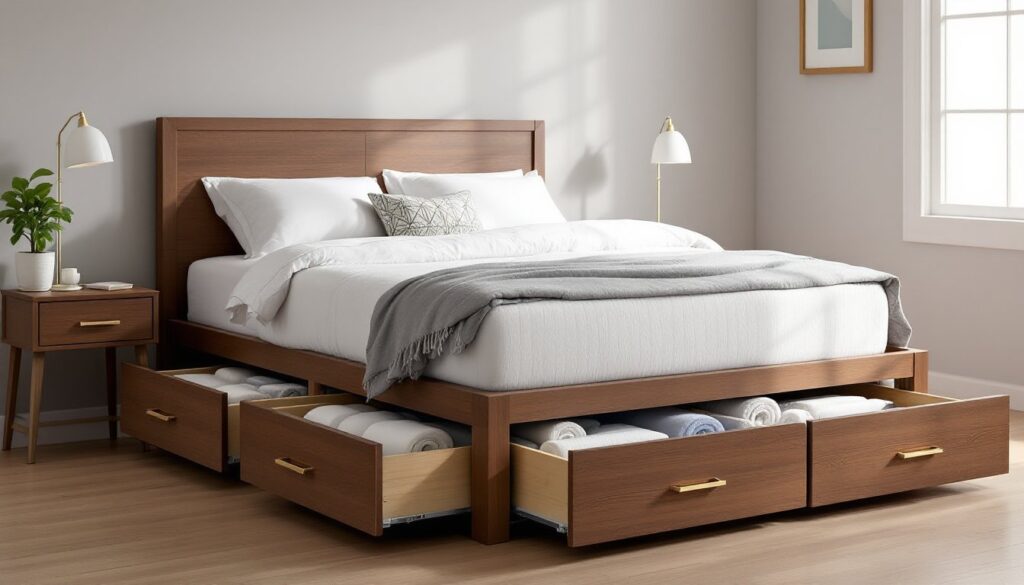
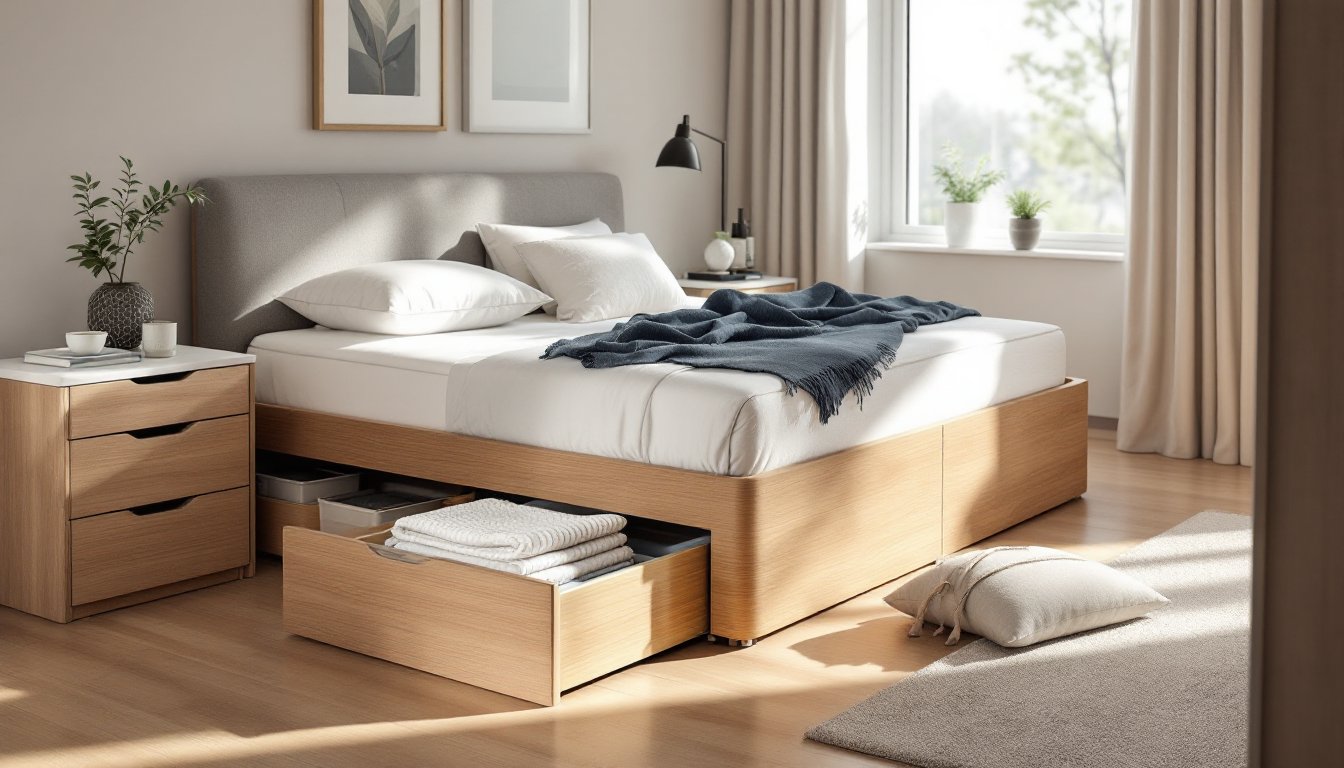
Drawer-style storage beds have built-in drawers that roll out from the sides or foot of the frame. Each drawer typically holds 20–50 pounds, depending on size and construction. They’re ideal for items you access regularly: extra pillows, blankets, seasonal clothes, or books. The drawers glide on ball-bearing slides, which is crucial, cheap hardware will bind or derail quickly. When evaluating drawers, check that they have stops to prevent over-pulling, and that the frame doesn’t flex when a drawer is extended.
Lift-up beds (also called Ottoman beds in Europe) feature a hydraulic or mechanical lift system that raises the entire mattress platform, revealing one large compartment underneath. This design is a game-changer for bulky items like suitcases, holiday decorations, or off-season sporting gear. The tradeoff is that you need 6–8 inches of headroom above the mattress for the platform to clear, and the lift mechanism adds cost. Quality lift beds use piston-assisted hydraulics that hold the platform open safely without you having to prop it with a stick or your leg. Cheap ones might drift closed while you’re loading or unloading, a pinch hazard and a frustration.
Under-Bed Shelving And Open Storage Options
Open storage beds skip drawers altogether and use low shelves or an open frame structure. You might see wooden slats, metal lattice, or tiered compartments. This approach is lighter, more affordable, and easier to build yourself. The downside: everything is visible, so it only works if you’re storing items you don’t mind seeing (decorative baskets, curated book collections, decorative boxes).
Under-bed shelving can also mean add-on storage boxes or bins that slide under a standard bed frame. These range from simple fabric boxes with handles to rolling plastic containers on wheels. They’re a retrofit option if you already own a bed and don’t want to replace it. But, they offer less stability and protection than integrated storage, and accessing items can be awkward if the space is tight.
Benefits For Small Spaces And Modern Homes
In compact homes and apartments, a storage bed base is almost mandatory thinking. A typical queen-size bed occupies roughly 5 feet × 6.5 feet of floor area. Standard bed frames leave 2–3 cubic feet of dead space underneath, that’s room for 20–30 storage boxes or 4–5 full-size dresser drawers worth of capacity. By using that space, you avoid buying additional furniture pieces that eat up floor area and visual real estate.
Small bedrooms can feel cramped when furniture competes for space. A storage bed base actually reduces clutter because it consolidates storage. Instead of an extra dresser, bookshelf, or desk with shelves, you’ve got one integrated unit. The room feels less crowded even though you have more storage. This is especially valuable in guest rooms or home offices with sleeping areas, where every corner serves double duty.
Modern homes increasingly prioritize multifunctional furniture. A storage bed base aligns with this trend, it solves a real problem without requiring a design overhaul. Contemporary styles favor clean lines and minimal visual weight, and many storage beds are designed with these aesthetics in mind. You can find frames in wood, metal, upholstered, or hybrid styles that complement minimalist, industrial, or traditional decor. For renters or folks who move frequently, a modular or flatpack storage bed base offers flexibility without the commitment of custom built-ins.
How To Choose The Right Storage Bed Base For Your Needs
Measure your room and understand what’s actually under your bed. Start by measuring the width and length of your mattress (add a few inches to account for the frame). Measure the clearance between the floor and the bottom of your current bed frame or the wall. Most queen and full beds need 38–42 inches of height for a standard box spring and mattress: storage beds are similar, but if you’re upgrading to one with a lift-up, factor in that extra 6–8 inches of headroom for raising the platform. Doorways and stairwells matter too, can the bed base fit up the stairs, or will you need to disassemble it?
Decide what you’ll store and how often you need it. If you’re storing seasonal items you access twice a year, a lift-up bed or deep under-bed boxes work great. If you’re accessing extra pillows and blankets weekly, drawer-style makes more sense. Be honest about how much volume you actually need: oversizing leads to wasted money and unused space. A full-size bed frame with storage might give you 8–12 cubic feet of usable space, that’s substantial but not unlimited.
Consider assembly, weight limits, and construction quality. Flatpack storage beds are cheaper and fit in smaller vehicles, but assembly takes 2–4 hours and requires basic tools and patience. Solid wood or metal frame beds are heavier and pricier but often more durable. Check weight capacity labels, a quality storage bed base should support 300–500 pounds total (mattress, sleepers, stored items combined). Cheap particleboard bases sag and fail within a few years.
Look at drawers and hardware closely. Ball-bearing slides, soft-close mechanisms, and stops prevent drawer frustration. Metal frames hold up better than wood under repeated use. If drawers are wrapped in fabric or upholstery, check that seams are sewn, not glued. Many DIYers find that projects from instructables offer step-by-step plans if you want to build a custom bed base, while others prefer purchasing a proven design. If you want inspiration from real-world hacks, an IKEA storage bed solution shows how creative modifications can transform standard components into affordable storage frames.
Set a realistic budget. Entry-level storage beds run $300–$600. Mid-range, quality options (solid wood, smooth drawers, good hardware) run $800–$1,500. Premium lift-up beds with hydraulics or high-end solid wood construction run $1,500–$3,000+. Don’t cheap out on hardware, a stuck drawer or failing lift mechanism will cost more to repair than the initial savings. Factor in mattress and bedding costs too: some storage beds are sold as bases only.
Conclusion
A bed base with storage is a smart investment for anyone serious about maximizing space and reducing clutter. Whether you choose drawer-style, lift-up, or open shelving, the key is matching the design to your actual storage needs, room dimensions, and budget. Take time to measure, research durability, and understand the assembly or delivery logistics before buying. A solid storage bed base will serve your bedroom for a decade or more, and every day, it works quietly to keep your room more organized and livable.