
Bathroom clutter sneaks up fast. Scattered bottles, tangled hair tools, and unopened products pile up on countertops and under sinks, leaving your space feeling cramped and chaotic. A well-chosen bathroom storage box isn’t just about tucking things away, it’s about making your daily routine faster and your bathroom look intentional. Whether you’re working with a tight powder room or a sprawling master bath, the right storage solution can transform wasted space into organized zones. This guide walks you through choosing, installing, and maximizing bathroom storage boxes so everything has a place.
Table of Contents
ToggleKey Takeaways
- A bathroom storage box preserves product longevity by protecting cosmetics, medications, and toiletries from moisture, temperature swings, and light exposure.
- Under-sink organizers and wall-mounted solutions maximize space in any bathroom size—account for P-traps when measuring cabinet depth and locate wall studs before mounting for secure installation.
- Choose storage boxes based on what you store: sealed boxes for medications and vitamins, open baskets for towels and frequent-use items, and materials that match your bathroom’s aesthetic.
- Install storage securely by pre-drilling pilot holes, using a level to ensure straight placement, and always applying a 50 percent safety margin when calculating weight capacity.
- Organize contents by category with labels and dividers, keep daily-use items at arm’s reach, and use desiccant packets to manage moisture in sealed storage boxes.
- Proper bathroom storage box organization saves money by preventing duplicate purchases, accelerates morning routines, and creates a visually cleaner, more spacious bathroom.
Why Bathroom Storage Boxes Are Essential for Every Home
A bathroom storage box does more than hide clutter, it extends the life of your products and protects your investment. Cosmetics, medications, and toiletries degrade faster when exposed to moisture, temperature swings, and direct light. Sealed or semi-sealed storage boxes create micro-environments that keep humidity and dust away from sensitive items.
Beyond preservation, organization saves you money and time. You’ll stop buying duplicate shampoo bottles because you actually know what you have. Morning routines move faster when everything lives in logical spots rather than scattered across shelves. And visually, a bathroom with contained storage reads as cleaner and more spacious, even if square footage hasn’t changed.
For families sharing one bathroom, designated boxes also prevent the daily scramble for hair dryers, nail clippers, and medications. Kids can grab their own toiletries without raiding the medicine cabinet. Guests don’t see the full inventory of your personal care routine. It’s about both function and dignity.
Types of Bathroom Storage Boxes to Consider
Under-Sink and Cabinet Organizers
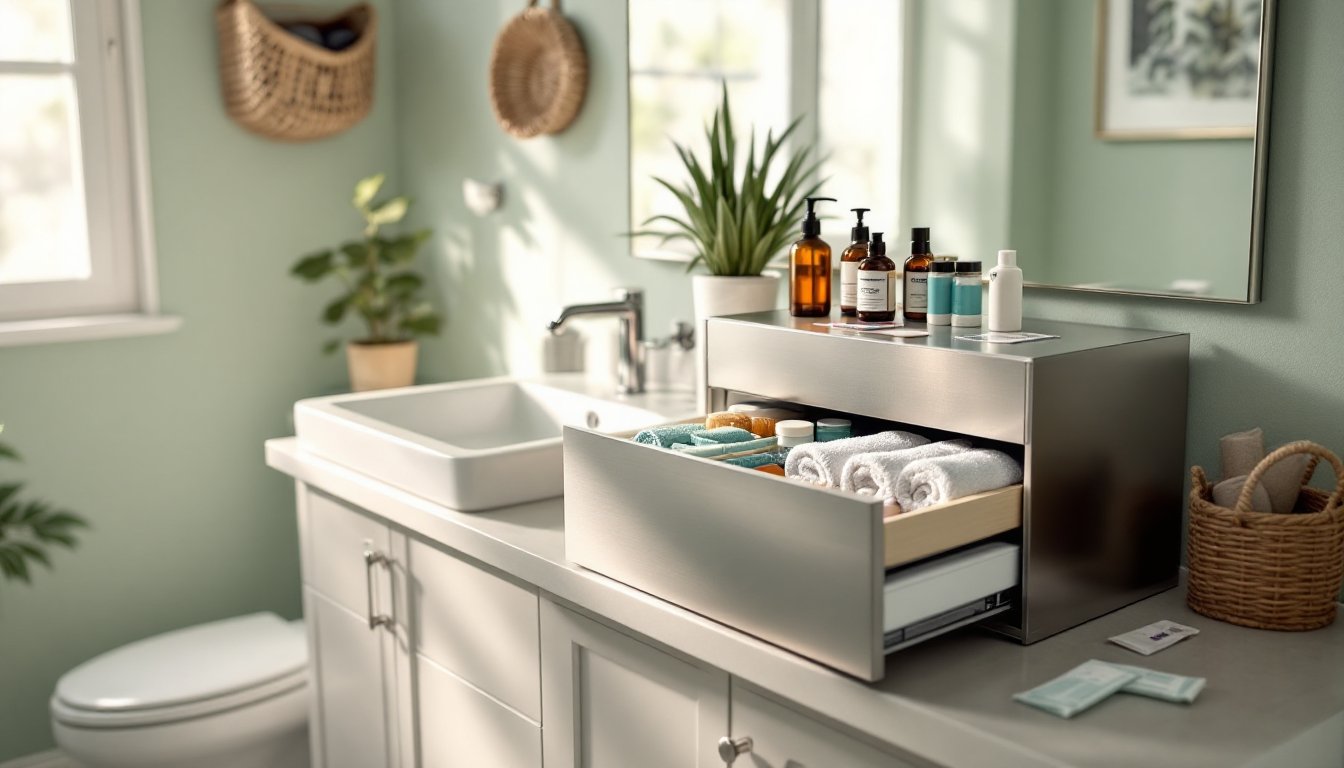
The space beneath your bathroom sink is prime real estate, but it’s often wasted on a jumble of pipes and random junk. Under-sink organizers come in several forms: pull-out drawers, tiered shelves, sliding baskets, and modular bin systems. Most fit standard 24-inch-wide cabinets, though custom depths vary.
When measuring, account for the P-trap (the curved pipe under the drain). It typically sits 4 to 6 inches from the back wall and reduces usable depth. Sliding baskets work well here because they don’t block access to pipes if something leaks. Avoid solid shelves that prevent quick inspection or plumbing access.
Material matters. Stainless steel resists moisture and rust better than coated particleboard, especially in high-humidity bathrooms. Waterproof liners (removable fabric or silicone-coated bottoms) protect shelves from minor drips. Expect to spend $25–75 per organizer depending on size and material quality.
Wall-Mounted and Shelving Solutions
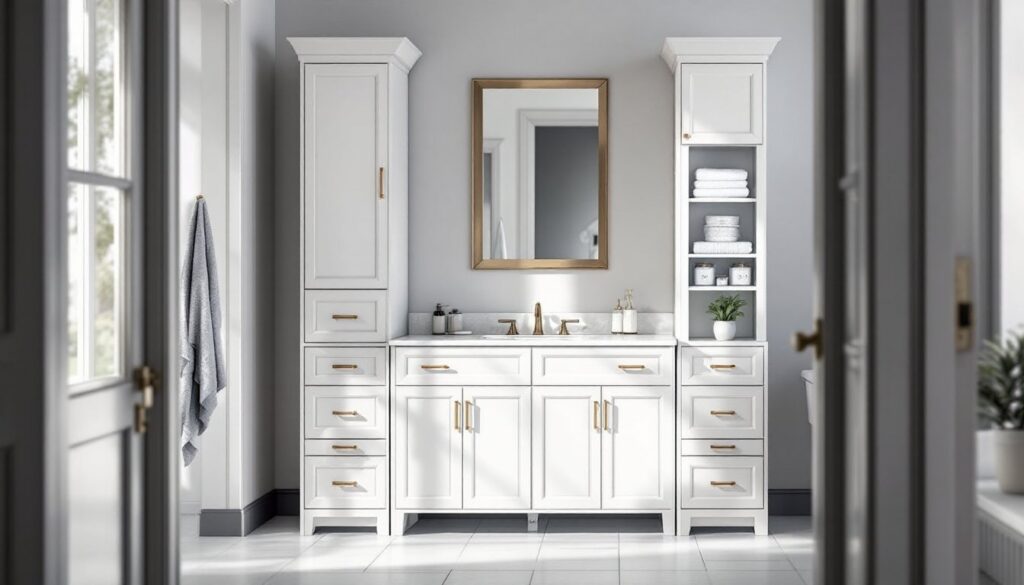
Wall-mounted bathroom storage boxes and floating shelves maximize vertical space without eating floor area. They work especially well in small bathrooms where cabinet space is limited. Install boxes at eye level (typically 48 to 60 inches from the floor) for easy reach and visual balance.
Mounting requires finding studs (vertical wooden frames behind drywall, typically spaced 16 inches apart). A stud finder ($15–30) is worth the investment. Mount shelves or boxes directly into studs using lag bolts or fasteners rated for the weight of your items plus 50 percent safety margin. For lightweight baskets, toggle bolts or heavy-duty drywall anchors work on stud-free walls, but they won’t support a heavily loaded medicine cabinet.
Consider 10 easy pieces bathroom storage baskets for curated options ranging from woven wicker to modern plastic. Wall space above the toilet or beside the vanity are ideal spots. Expect installation to take 30–60 minutes if you’re locating studs and drilling pilot holes.
How to Choose the Right Storage Box for Your Bathroom
Start by auditing what you actually store. Medications, cosmetics, hair tools, cleaning supplies, first-aid kits, and extra towels each need different conditions. Sealed boxes work best for medications and vitamins (protection from humidity and light). Open or semi-open baskets suit towels and frequently used items like hair brushes.
Measure your available space honestly. Jot down the width, depth, and height of your target location, under the sink, above the toilet, inside a closet shelf. Many DIYers skip this step and end up with a box that doesn’t fit. Check clearance around faucets, handles, and pipes.
Consider material and aesthetics together. Plastic bins are budget-friendly ($8–20) and waterproof, but they can look utilitarian. Woven baskets ($15–40) complement most decor but need liners if storing liquids. Painted wood or metal boxes ($30–80) blend seamlessly with custom cabinetry. Your choice should match your bathroom’s style without feeling forced.
Capacity and access are practical must-haves. A large box crammed behind other items becomes a graveyard for forgotten products. Smaller, labeled boxes encourage regular use. Transparent or semi-transparent sides let you see contents without opening. Pull-out or sliding designs beat fixed boxes for deep cabinets, you’ll actually retrieve items from the back instead of leaving them to expire.
22 bathroom storage ideas showcase real-world solutions that balance style and function, helping you visualize options before committing to purchases.
DIY Installation and Organization Tips
Prep work determines success. Wipe down shelves, remove old shelf liner, and inspect for water damage or mold. Let surfaces dry completely. If you spot mold, clean it with a 1:1 bleach-to-water solution and dry thoroughly before installing boxes.
When mounting wall-shelves or boxes, locate studs with a stud finder and mark with a pencil. Drill pilot holes (slightly smaller than your screws) to prevent wood splitting and make driving easier. Use a level to ensure boxes sit straight, even slight tilts look sloppy and allow items to roll. Pre-drilling takes 5 minutes and prevents $50 mistakes.
For under-sink storage, remove everything first. Measure the P-trap and any shutoff valves to confirm you have working depth. If pipes are exposed or poorly finished, consider a flexible hose sleeve ($5–10 at hardware stores) to protect shelves from drips. Install your organizer from back to front, securing any brackets with hex bolts or shelf screws as the manufacturer specifies.
Organization inside boxes matters as much as boxes themselves. Use small containers or dividers within larger boxes to sort by category: morning routine, evening routine, medications, hair care. Label everything. Expiration dates on medications and cosmetics should be front-facing so old products get used first. Rotate stock regularly.
Don’t overlook moisture management. Silicone-coated shelf liners ($8–15) protect wood or particleboard from humidity. Consider small desiccant packets or silica gel packs ($5–10) inside sealed boxes storing medications or vitamins, they absorb excess moisture and extend shelf life. Replace packets every 3–6 months depending on bathroom ventilation.
For accessibility, follow the 80/20 principle: 80 percent of what you reach for should be at arm’s reach. Daily-use items like deodorant or sunscreen belong front and center. Seasonal items (sunscreen in winter, moisturizer in summer) can move to less convenient shelves. It’s a simple shift that makes morning routines smoother. 25 bathroom storage ideas for small bathrooms includes layout strategies for tight spaces where every inch counts.
Conclusion
Bathroom storage boxes transform chaotic mornings into intentional routines. Whether you’re installing under-sink organizers, mounting wall shelves, or adding woven baskets, the key is matching the solution to your actual needs and your space’s constraints. Take time to measure, choose durable materials, and install securely. Then label, organize, and maintain. A well-organized bathroom isn’t luxury, it’s a practical investment that pays dividends every single day.