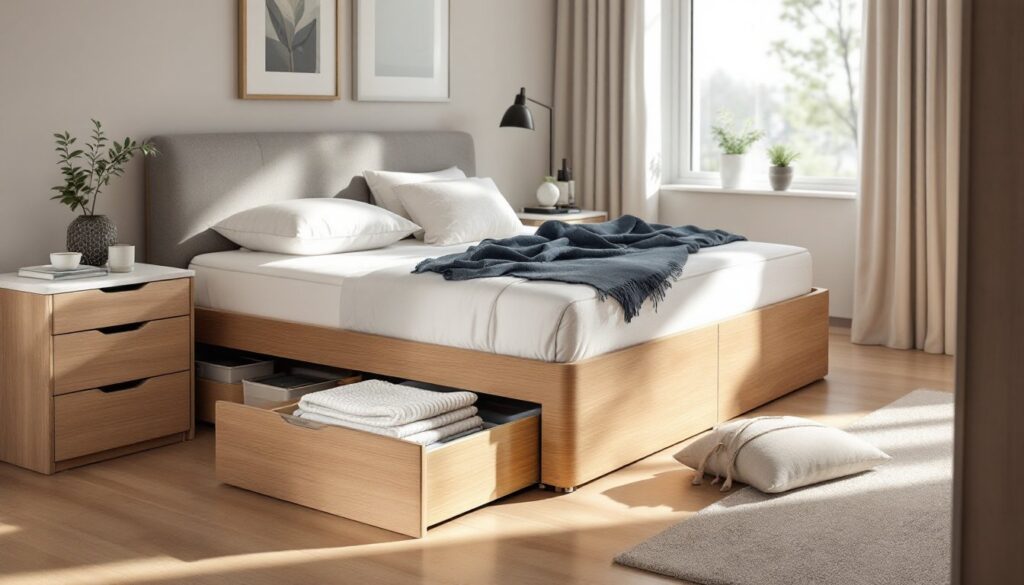


A king-size bed dominates most bedrooms, and rightfully so, it’s a comfort investment. But here’s the catch: that same footprint can swallow valuable square footage. A king bed with storage flips the script, turning wasted under-bed real estate and headboard walls into functional organization. Whether you’re working with a compact master or just tired of bedroom clutter spilling into closets, a storage king bed delivers sleeping comfort and practical storage without requiring a home expansion. This guide covers the real options, setup considerations, and how to pick the right solution for your space.
Table of Contents
ToggleKey Takeaways
- A king bed with storage reclaims valuable bedroom space by consolidating sleeping furniture with built-in drawers, under-bed compartments, or headboard shelving, eliminating the need for separate dressers and storage benches.
- Three main storage styles—drawer-based units, elevated frames with under-bed access, and platform beds with integrated compartments—offer flexibility for different room layouts and accessibility preferences.
- Quality hardware matters significantly: invest in full-extension ball-bearing drawer slides ($40–$80 per set) rather than cheap alternatives ($15–$25) that wear out within 2–3 years of regular use.
- Measure doorways and room dimensions carefully before purchasing a storage king bed; ensure at least 36 inches of floor space for walking comfort and verify that the bed can fit through standard 32-inch interior doors during delivery.
- DIY storage bed projects and IKEA hacks can cost $150–$300 in materials versus $600–$1,000 for pre-built options, but success depends on proper assembly, level surfaces, and square frame corners using a carpenter’s square.
- Store seasonal items, linens, and shoes under or in your storage bed, but avoid anything damp, food-based, or pest-prone, and place heavier items in lower drawers to maintain stability and minimize noise.
Why Choose a King Bed With Built-In Storage
Space is premium in most homes. A standard king bed (76″ wide × 80″ long) occupies roughly 42 square feet of floor space, and that doesn’t account for nightstands, dressers, or walking room. Adding storage to the bed itself reclaims what would otherwise sit empty underneath or against the wall.
Built-in storage eliminates the need for a separate dresser or storage bench, cutting down on furniture clutter. Seasonal items, winter bedding, extra pillows, off-season clothing, tuck away without eating into closet space. The storage sits where you’re already sleeping, so accessibility is built into your nightly routine rather than tucked away in a basement corner.
Beyond function, a storage king bed often costs less than a bed-plus-dresser combo. You’re not duplicating furniture: you’re consolidating it. This approach also works well in kids’ rooms, guest bedrooms, and smaller master suites where every square foot counts. Storage beds come in multiple styles, modern, traditional, rustic, so aesthetics don’t have to suffer for practicality.
Types of Storage King Beds and How They Work
Drawers and Under-Bed Storage
Drawer-style storage beds hide drawers in the footboard or along the sides, usually rolling on ball-bearing slides for smooth operation. A typical king bed with drawers includes two to four spacious compartments, each holding 20–40 pounds depending on the frame design. This type works best for items you access regularly, extra blankets, pillows, or off-season clothing.
Under-bed storage takes a different approach: the entire bed frame sits elevated on legs (typically 12–18 inches high), leaving open space underneath. You slide storage bins, boxes, or vacuum-seal bags in and out as needed. This style is more flexible, you choose what containers fit your needs, and it’s easier to access items without opening and closing drawers. The downside: items aren’t concealed, so bins or boxes need to match your decor or slide out of sight.
For DIYers, building a wood storage bed with drawers is achievable with basic tools, a miter saw, drill, and pocket hole jig. Plans typically call for 2×10 or 2×12 lumber for the base, full-extension drawer slides (rated for 100+ pounds), and 3/4″ plywood for drawer boxes. Account for wood expansion: leave 1/16″ clearance around each drawer. Finish with polyurethane to protect against moisture and dust buildup.
Headboard and Platform Storage
Headboard storage leverages wall space above the bed. Shelves, cubbies, or cabinets built into the headboard store books, decorative items, or everyday essentials within arm’s reach. Some designs include a low-profile shelving unit: others integrate cabinets with solid backing for a polished look. The advantage: vertical space usage without extending the bed’s footprint.
Platform storage beds combine a raised platform (8–14 inches high) with enclosed storage underneath. The platform itself sits on a structural frame with drawers or a large compartment built in. This style is cleaner than under-bed storage because the frame conceals everything. Load capacity matters here, make sure the bed frame is rated for at least 1,500 pounds total (bed + mattress + occupants). Cheaper platform beds can sag or fail if undersized.
When evaluating any storage bed, check the drawer weight rating and full-extension capability. Ball-bearing slides cost more upfront but prevent the common complaint of drawers getting stuck halfway. Budget $40–$80 per high-quality slide set: cheap slides ($15–$25) wear out in 2–3 years of regular use.
Design and Style Considerations for Your Space
A storage bed must fit your room’s existing aesthetic and layout. In a modern bedroom, a low-profile platform bed with slab-style drawers looks intentional. In a traditional space, a bed with paneled headboard storage and shaker-style drawers complements period furniture.
Color and finish also matter. A natural wood bed suits warm, rustic interiors: a white or gray upholstered frame works in contemporary schemes. If you’re painting the bed, use a primer rated for wood (like BIN or Zinsser 1-2-3) before two coats of quality paint, cheap latex will chip and show wear fast. Upholstered beds hide dust better but require occasional vacuuming.
Room layout affects where storage access happens. A bed with drawers on the footboard works if you have space at the foot. A side-drawer design needs clearance on at least one side. If your room is tight, under-bed storage on a high frame (16+ inches) leaves room for low storage containers without sliding them constantly. Measure your doorway, a prebuilt bed needs to fit through during delivery.
For budget-conscious DIYers, IKEA Hackers hosts creative modifications: you can take a simple IKEA platform bed and add drawer slides or custom headboard storage. The base frame and slats cost $150–$300, then you invest in hardware and finishing. This approach costs less than a mid-range purpose-built storage bed ($600–$1,000) but requires hands-on work.
Selecting and Setting Up Your Storage King Bed
Start by measuring your room and doorways. A king bed is 76″ wide and 80″ long (mattress dimensions). Add the headboard height (if any) and the footboard depth. Ensure at least 36 inches of floor space around the bed for walking and making the bed comfortably. If doorways are tight (standard interior doors are 32″ wide), a flat-packed bed or one you assemble in-room is safer than a solid unit delivered fully assembled.
Decide what you’ll store. Seasonal items, extra linens, and shoes are ideal. Anything damp, food, or pest-prone shouldn’t live under a bed, moisture and odors linger. Heavy items (books, tools) are fine if drawers or slides are rated accordingly: most quality beds handle 300–500 pounds distributed across all storage compartments.
When assembling, lay the frame on a level floor and check that all corners are square using a carpenter’s square or by measuring diagonals, they should be equal. Tighten all bolts, especially around the mattress support, and check after one week of use as wood can shift. If using drawer slides, don’t skip the essential preparatory steps, clean the mounting surface, use a level to align each slide, and install hardware precisely. Misaligned slides bind and fail.
For a second pair of hands: assembling a bed frame solo is possible but awkward. Drawers are easier alone, but lifting and leveling a king frame while fastening it is safer and faster with help. If building custom, ensure you’re using pressure-treated lumber only if the bed is outdoors: standard furniture uses untreated pine or hardwoods. Apply finish (stain or paint) before assembly to avoid brush marks and drips on completed work.
After setup, add felt pads under the frame legs to protect floors and make sliding easier. Store heavier items in lower drawers for stability. Use bins or dividers to maximize under-bed space, random items shift during sleep and create noise.
Conclusion
A king bed with storage works because it solves a real problem: bedrooms need both sleep and storage, and a storage bed delivers both without cramping your space. Whether you buy a finished frame, customize one from a trusted woodworking source, or hack an IKEA base, the payoff is a bedroom that’s both functional and clutter-free. Measure carefully, match your style, and invest in quality hardware, that’s where most DIY bed projects succeed or stumble.