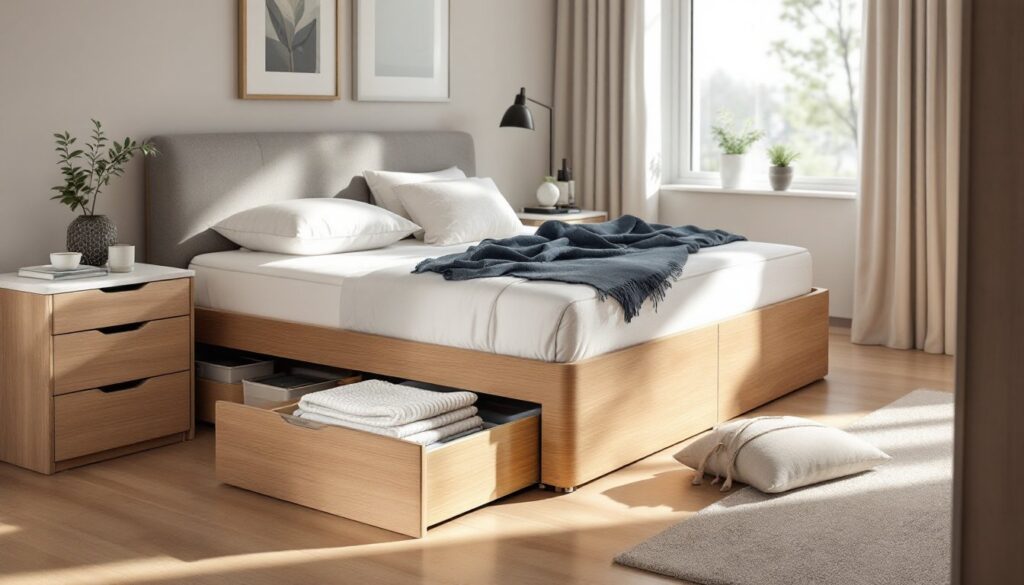


Square footage in modern homes keeps shrinking, yet bedrooms still need to function as everything from a sleeping space to a walk-in closet. A queen bed with storage tackles this head-on by combining a comfortable sleeping surface with built-in organization, no awkward dressers crowding the room or Under-bed clutter. Whether you’re furnishing a primary bedroom, guest room, or studio apartment, a queen storage bed maximizes usable floor space while keeping linens, seasonal clothes, and bedding within arm’s reach. For homeowners and DIYers looking to reclaim square footage without sacrificing comfort, this is a practical investment that pays dividends.
Table of Contents
ToggleKey Takeaways
- A queen bed with storage provides 15 to 30 cubic feet of additional storage space, making it comparable to a small dresser and ideal for maximizing floor space in modern homes.
- Under-bed drawers are best for daily-use items like pillows and linens, while lift-up hydraulic storage works better for seasonal rotation and bulk items.
- Measure your bedroom carefully before purchasing a queen storage bed, as these frames typically add 2 to 4 inches in height and impact room flow.
- Choose between under-bed drawers, lift-up storage, or headboard shelving based on what you need to store and how frequently you’ll access the space.
- Heavy-duty solid wood queen storage beds support 800 to 1000 pounds, while budget metal frames max out at 400 to 500 pounds—verify weight capacity before buying.
Why Queen Beds With Storage Are Game-Changers for Modern Homes
A standard queen bed frame measures 60 inches wide by 80 inches long. Add a headboard and you’re looking at a footprint that doesn’t leave much breathing room in a typical master bedroom. Storage beds eliminate the guilt of wasted space beneath the mattress, a zone that usually holds dust bunnies, lost socks, and forgotten boxes.
The efficiency gain is real. A queen storage bed can provide 15 to 30 cubic feet of additional storage depending on the design, which is comparable to a small dresser or closet rod. For families living in tight quarters, that’s the difference between throwing out-of-season clothes in a closet or keeping them accessible and organized. Parents of young kids also appreciate the lower-profile designs that keep bulky toys and extra bedding out of the main living area.
Beyond logistics, storage beds have become mainstream enough that you’ll find models at every price point and style, from sleek mid-century modern designs to rustic wood frames. This means you’re not compromising aesthetics to gain function. A well-chosen storage bed actually anchors a bedroom, looking intentional rather than like an afterthought.
Types of Queen Bed Storage Options to Fit Your Needs
Under-Bed Drawers and Lift-Up Storage
Under-bed drawers are the workhorse of bedroom storage. They’re typically 24 to 36 inches deep and 48 to 56 inches wide, deep enough to hold a full set of winter bedding or stacked sweaters, but not so deep that you strain reaching the back. Quality models roll on soft-close glides, which means no more slamming drawers waking your partner at midnight.
Lift-up storage (also called hydraulic or spring-assist beds) raises the entire mattress platform to reveal a hollow frame underneath. You get one large, open compartment rather than divided drawers. This works beautifully for storing under-bed boxes or vacuum bags, though you trade organizational finesse for raw capacity. Hydraulic pistons do the heavy lifting, so the mattress rises and lowers effortlessly, important if you’re frequently accessing the space or if mobility is a concern.
Drawer beds are generally more accessible for daily use (grabbing a spare pillow case), while lift-up storage suits seasonal rotation (stowing away that old sleeping bag in July).
Headboard Storage and Built-In Shelving
Headboard storage runs the width of the bed and typically ranges from 12 to 18 inches tall above the mattress. Some designs include open cubbies, closed cabinets, or a mix. You’ll use this for books, alarm clocks, phone chargers, plants, or decorative objects that would otherwise clutter nightstands.
Built-in shelving around the bed turns the frame into a compact storage unit. Think shelves flanking the headboard or integrated nightstand compartments. These are often custom builds, but modular options exist that snap together without tools. The upside is visual appeal, everything stays off the floor and organized at arm’s reach from bed. The downside is dust accumulation on open shelves if you don’t maintain them, and the need for more intentional decorating so shelves don’t look cluttered.
How to Choose the Right Queen Storage Bed for Your Space
Start by measuring your bedroom. Don’t just eyeball it, grab a tape measure and check the distance from wall to wall, doorway swing, and any angled ceilings. A queen storage bed typically adds 2 to 4 inches in height depending on drawer depth and mattress thickness. If headroom is tight or you have a low-sloped ceiling, this matters.
Second, identify what you actually need to store. Are you primarily managing off-season clothes? Kids’ toys? Linens and pillows? Under-bed drawers excel for flat items and soft goods: headboard shelving works for books and smaller objects. Be honest about access frequency too. If you’re pulling out storage every week, smooth-rolling drawers beat lift-up mechanisms for wear and tear.
Third, consider mattress height and how you’ll transfer weight onto it, especially if you’re older or have mobility limitations. Some storage beds sit lower to the ground (around 20 inches from floor to mattress surface), while others sit higher. A taller frame can be easier to get in and out of, but it crowds the room visually.
Fourth, verify that the construction suits your flooring. Heavy platform beds can compress carpet or leave marks on hardwood if not fitted with proper sliders or felt pads. Adjustable feet or casters give you flexibility to protect your floors while allowing repositioning for cleaning.
Finally, check weight capacity. A solid wood queen storage bed can safely hold 800 to 1000 pounds, but cheaper metal frames max out around 400 to 500 pounds. If two adults and a dog are sleeping on it, you need the real stuff.
DIY Tips: Maximizing Your Queen Bed Storage Potential
If you’re buying a ready-made storage bed, the assembly is usually straightforward, most arrive with pre-drilled holes and cam locks or bolts. Lay all pieces on the floor first, read the instruction manual without skipping steps, and enlist a second set of hands. Two people assembling a bed beats one person wrestling with a frame that’s meant to be level and square.
Missing hardware happens. Before assuming it’s lost, double-check the instruction sheet: sometimes bolts are bagged inside the headboard or tucked into a drawer. Have a cordless drill or power driver ready, hand-screwing 40 bolts will leave you frustrated.
For under-bed storage, resist the urge to overstuff drawers. Overpacked drawers are harder to open and put strain on the glides. Store heavier items (winter coats, extra blankets) in lower drawers if the bed has multiple tiers. Lighter items (delicate fabrics, seasonal accessories) can go higher. Use vacuum-sealed bags to compress bulky textiles and maximize space, just leave a 2-inch buffer to prevent the drawer from jamming.
If you’re building from scratch, IKEA Hackers and The Handyman’s Daughter both have solid tutorials on reinforcing budget frames or adding custom storage beneath platform beds. Real wood (pine, oak, or plywood) is more durable than particle board for a long-term DIY build. A basic queen platform bed requires a 3/4-inch plywood base, two full-length side rails (made from 2×10 lumber), and a supportive center beam to prevent sagging. Pre-drill holes before driving screws to reduce splitting.
Use moisture barriers if your bedroom sits above a damp basement. A vapor barrier underneath the platform protects the wood from humidity. Elevated feet or a slatted base, rather than a solid platform, also helps air circulation and prevents mold issues in humid climates.
Conclusion
A queen bed with storage isn’t a luxury add-on, it’s a practical solution for maximizing bedroom function without resorting to wall-to-wall furniture. Whether you opt for under-bed drawers, lift-up storage, or headboard shelving, the payoff is reclaimed floor space and organized, accessible storage. Choose a design that fits your room’s dimensions, your lifestyle, and your aesthetic. Then assemble it carefully, stock it smartly, and enjoy a bedroom that actually works as hard as you do.