
A cluttered spice cabinet is the enemy of both organization and flavor. When jars pile haphazardly onto shelves, spices lose potency faster, you can’t find what you need, and you end up buying duplicates you already own. The difference between a kitchen that feels calm and one that feels chaotic often comes down to how you store the small things, and spices are often the worst offender. This guide walks you through practical spice storage solutions that keep flavors fresh, save counter and cabinet space, and actually look intentional rather than thrown together.
Table of Contents
ToggleKey Takeaways
- Proper spice storage solutions extend shelf life by months and prevent flavor loss caused by heat, light, moisture, and air exposure.
- Glass jars with airtight seals and dark-colored containers are the most reliable option, costing $15–25 for a starter set of 24 jars.
- Store spices in cool, dark cabinets away from the stove and sink—heat and humidity are the primary enemies of spice potency.
- Alphabetical order or grouping by cooking use (baking vs. savory) makes your spice system maintainable and saves time during meal prep.
- Always label and date your spices with waterproof labels, and consider a master inventory list to avoid buying duplicates and reduce kitchen clutter.
Why Proper Spice Storage Matters
Spices are volatile. Their essential oils, which carry flavor and aroma, break down when exposed to heat, light, moisture, and air. An open container sitting on a shelf above your stove loses potency in weeks: the same spice sealed in a cool, dark cabinet stays strong for months. Beyond freshness, poor spice storage creates invisible waste. You buy cumin, forget you have it, buy again. Bottles tip over and shatter. Labels fade, and you’re left guessing whether that unlabeled jar is oregano or something else entirely. Proper spice storage fixes all of this. It extends the shelf life of expensive spices like saffron and vanilla, keeps your cabinet visible and logical, and prevents the frustration of searching through ten similar-looking jars to find what you need. This is especially true in small kitchens where every inch counts. A well-organized spice system frees up mental load, you know what you have, where it is, and how fresh it is.
Container Options for Every Kitchen Style
Your choice of containers shapes both function and aesthetics. The right containers seal out air, resist moisture, and fit your space and budget. Here are the two most practical options:
Glass Jars and Airtight Containers
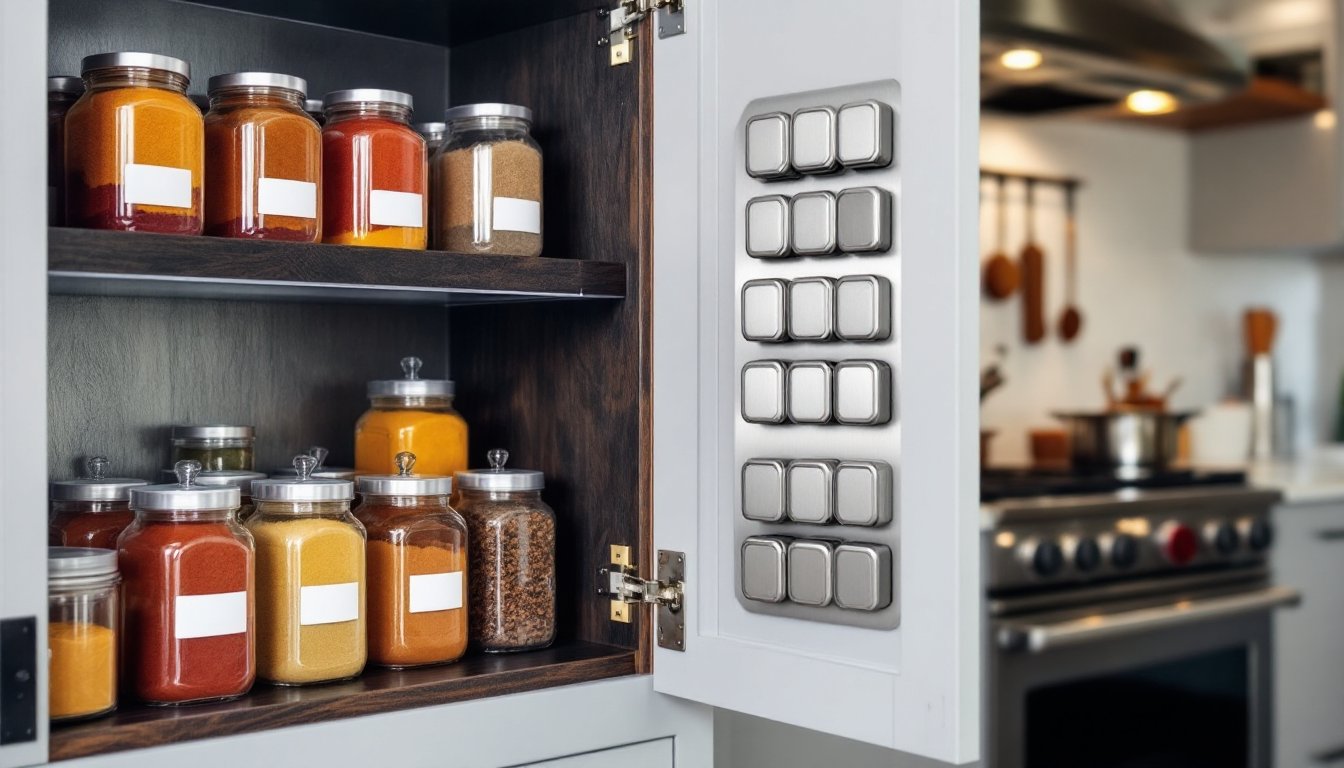
Glass is the standard for serious home cooks. Look for jars with airtight rubber gaskets or plastic clip lids, these create an actual seal that keeps moisture and air out. One-quart or smaller jars work best for most spices: you’ll use them before they expire. Avoid wide-mouth jars for powders like turmeric or paprika: they expose more surface area to air each time you open them. Labels are essential: use waterproof sticker labels or a label maker, and always date your spices when you fill them. A typical gallon of spice-grade glass jars (say, 24 one-cup jars with lids) costs $15–25. Dark glass or opaque plastic containers offer better light protection than clear glass, which matters for delicate spices. Admittedly, glass jars take up more space than squeeze bottles, so you’ll need dedicated shelf room. Drawer inserts with tiered dividers help maximize small cabinets.
Magnetic Spice Tins and Wall-Mounted Systems
Small magnetic tins stick flat against a metal panel mounted to a wall or backsplash, freeing up cabinet and counter space. These are compact (roughly 2 inches square), stackable, and visually clean if arranged neatly. Brands like Kamenstein and budget options from Amazon offer sets of 12–20 tins for $20–50. The downsides: tins are small (maybe 2 tablespoons per container), which means frequent refills for heavy-use spices like salt and pepper. Labels on tins are small and easy to scratch off. Heat from cooking can warp thin metal. Still, for a small kitchen or rental where you can’t drill shelves, wall-mounted magnetic systems are clever space savers. Lazy Susans (turntable organizers) fit inside cabinets and let you spin to find what you need without reaching to the back. A basic turntable costs $10–20 and works especially well in corner cabinets or for frequently used spices.
Best Storage Locations in Your Kitchen
Location determines how fast spices lose potency. Avoid the shelf directly above your stove. Heat and steam from cooking break down essential oils rapidly, spices stored there may lose flavor in weeks rather than months. The cabinet below the stove is equally bad for the same reason. Corner cabinets far from the oven, away from direct sunlight, are ideal. A cabinet in a cool, dry zone, often the interior of a perimeter cabinet or an upper cabinet on a north-facing wall, keeps spices stable. Humidity near the sink is another enemy: don’t store spices in lower cabinets directly adjacent to the dishwasher or sink unless they’re in truly airtight containers. Some kitchens don’t have perfect cabinets. Renters especially may lack deep storage. A cool, dark drawer, lined with a mat to prevent rolling, works fine. Pantries are excellent if you have one. Basement or garage cabinets in climate-controlled spaces work, though you’ll need to check seasonally for moisture. Transparency matters: if spices are out of sight, you’ll forget them or buy duplicates. The best location is one you see regularly and can access in seconds when cooking. For visual inspiration on how others organize tight spaces, kitchen design experts at The Kitchn offer ideas that balance style with function.
Organization Systems That Actually Work
An organization system only works if you maintain it. Here’s what actually works instead of what sounds good in theory:
Alphabetical order is the standard for a reason. Find cinnamon instantly in a cabinet of 30 jars. It takes five minutes to arrange alphabetically and saves hours over a year.
Grouping by use works too: baking spices (cinnamon, nutmeg, allspice) in one section, savory spices (cumin, coriander, paprika) in another, salt and pepper front and center. This mirrors how you cook and reduces decision fatigue mid-recipe.
Tiered shelving or risers inside cabinets let you see every jar without moving others. Acrylic risers cost $5–15 and prevent the “lost jars in the back” problem that kills most organizational systems.
Labeling is non-negotiable. Write the spice name and the date purchased. Use waterproof labels: regular sticker labels peel off in humid kitchens. Date labels let you rotate stock, use older spices first. Many home cooks keep a master list (digital or printed) of what they own, helping you avoid duplicates and plan shopping. If you’re building a system from scratch, consider using storage solutions tools designed for kitchens: they’re specifically made to handle spice volumes and humidity. For those starting fresh, storage solutions for beginners offer step-by-step guidance. The visual appeal of matching containers and organized shelves is a bonus, but the real win is knowing what you have and finding it in seconds. That’s the system worth maintaining.
Conclusion
Smart spice storage is one of the highest-return organizing projects in a home kitchen. It costs between $30–100 depending on container choice, takes a few hours to carry out, and pays dividends every single time you cook. Start with airtight containers, a cool dark cabinet away from heat, and alphabetical order. You don’t need Instagram-perfect aesthetics, you need a system you’ll actually use and maintain. Your future self, mid-recipe and reaching for cumin without searching, will thank you.