

Most people open their bedroom closet and think they’ve run out of room. In reality, they’ve just run out of strategy. Bedroom clothes storage isn’t about squeezing in more hangers or buying another dresser, it’s about rethinking how you use the space you’ve got. Whether you’re in a cozy studio apartment or a master suite, this guide walks you through practical methods to maximize every cubic inch. You’ll learn how to evaluate what you actually own, organize it smartly, and find hidden storage spots you didn’t know existed. The result? A bedroom that feels calmer, a closet that functions better, and clothes you can actually find when you need them.
Table of Contents
ToggleKey Takeaways
- Effective bedroom clothes storage starts with evaluating and decluttering your wardrobe—removing unworn items frees up space far better than buying more organizers.
- A double rod system and adjustable shelving can nearly double closet hanging capacity for under $60 and 15 minutes of installation time.
- Under-bed storage containers tap into roughly 21 cubic feet of unused space on a standard queen bed, equivalent to a full dresser.
- Vertical storage solutions like floating shelves and corner units maximize wall space without consuming floor area in small bedrooms.
- Seasonal rotation using vacuum-seal bags reduces off-season clothing volume by 50–60%, keeping your active wardrobe accessible year-round.
- A smart bedroom clothes storage system combines one strategic organizational change at a time—start small and build as you adjust to your new setup.
Evaluate Your Current Wardrobe and Storage Needs
Before you buy a single organizer or install a new rod, take an honest look at what you own and how much storage you actually need. Pull everything out of your closet and dresser, and sort it into three piles: wear regularly, wear occasionally, and don’t wear.
Be ruthless. If an item hasn’t left the hanger in a year, it’s taking up real estate that active clothes need. This culling step is where most storage improvements actually begin, you’re not just shuffling clutter around, you’re eliminating the clutter itself.
Once you know what stays, measure your current storage. Take note of closet width and depth, hanging rod height, shelf dimensions, and available floor space. This data matters because a strategy that works on paper can fail in practice if a dresser doesn’t fit or a hanging organizer blocks the door. Note which clothes categories take up the most room: are you drowning in jeans? Do seasonal coats live there year-round? Understanding your actual load helps you allocate space proportionally. For most people, implementing storage solutions tips aligned with what they truly wear makes the biggest difference.
Closet Organization Systems That Actually Work
Once you know what you’re storing, choose an organization method that matches your habits and closet layout. The most common systems combine hanging rods, shelves, and bins, but the details matter.
For a standard 4-foot closet, a double rod system (one at standard height ~65 inches, one above it at 80–85 inches) nearly doubles hanging capacity without any structural work. You’ll need a closet rod bracket kit (typically $20–40) and 15 minutes with a drill and level. This is one of the quickest wins in closet organization.
Adjustable shelving above hanging rods works well for folded sweaters, purses, or seasonal items. Install shelf brackets every 16–24 inches to match wall stud spacing for proper weight support. Avoid over-tightening brackets into drywall alone: they’ll fail when loaded.
Hanging storage systems, like over-the-door shoe organizers or fabric hanging closet shelves, add accessible storage without permanent installation. A 12-pocket shoe organizer costs $15–30 and holds far more than shoes: socks, scarves, small bags, or accessories. These fit standard closet doors and work in rentals or temporary situations.
Hanging and Folding Strategies for Maximum Capacity
How you hang and fold makes a tangible difference in capacity. Hang heavier items on the main rod: jeans, jackets, dresses. Lighter, smaller items, shirts, lightweight knits, can live on a second rod to avoid clutter and creasing.
The Marie Kondo fold, a vertical rectangle that stands upright in drawers or small shelves, saves roughly 20% more space than traditional stacking. It takes a few tries to master, but once you do, you can see every item without moving others around. This visual system means you’re less likely to forget items and buy duplicates.
Use slim velvet or padded hangers instead of plastic or wire hangers. They cost more upfront ($1–2 each vs. 20 cents), but they take up 40% less rod space and prevent creases on delicate fabrics. Over a full closet, that difference adds up, you might fit 10–15 extra items on the same rod.
Group items by type, all shirts together, all pants together. Within each group, arrange by color or season. This isn’t aesthetic perfection: it’s functional. You know exactly where everything is, and you’re less likely to accidentally buy a third navy cardigan. Many find that applying best storage solutions specific to their closet layout transforms their daily routine.
Under-Bed and Vertical Storage Solutions
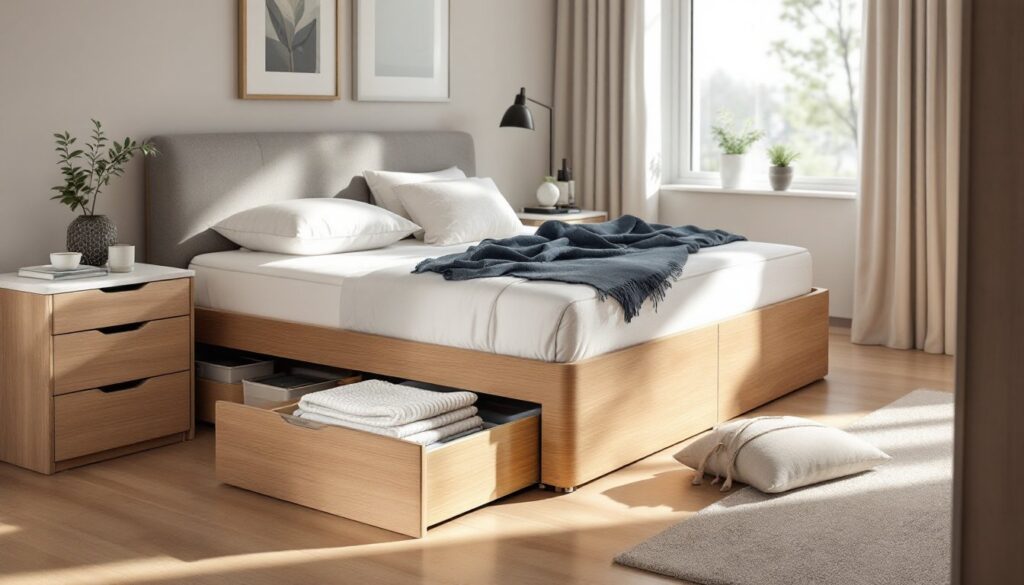
The space under your bed is prime real estate that most people ignore. A standard queen bed sits 10–14 inches above the floor, offering roughly 21 cubic feet of storage capacity. That’s as much room as a large dresser, sitting empty.
Under-bed storage containers come in several types. Shallow plastic bins on wheels ($15–30 each) slide out easily and work well for lightweight items like out-of-season clothes or extra blankets. Make sure bins don’t exceed the bed’s height clearance, or they’ll be impossible to slide. Label each bin clearly so you’re not hunting blind.
For heavier items or permanent storage, low-profile wooden storage benches ($100–250) serve double duty: seating at the foot of the bed and a lidded box inside. These look intentional, not like overflow storage, and fit better in styled bedrooms.
Vertical space above closet rods, shelves, and walls deserves attention too. Wall-mounted floating shelves (24–36 inches wide, $40–100 per shelf plus installation) hold folded clothes, boxes of seasonal items, or hats without eating floor space. Use floating shelf brackets designed for drywall and studs: they support 25–50 pounds depending on the bracket quality and fastener type.
Corner shelving units or tall, narrow bookcases ($50–150) fit snugly in unused corners and provide 4–6 usable shelves. Many DIYers pair these with fabric storage baskets ($10–20 each) to corral smaller items and keep the look neat. Ensure tall furniture is secured to wall studs with an L-bracket or anti-tip strap to prevent tipping, especially if kids or pets live in the home.
Furniture and Built-In Options for Small Bedrooms
If closet space is truly limited or your bedroom is small, furniture choices become part of your storage strategy. A bed with built-in drawers (sometimes called an underbed platform or storage bed) costs $300–800 more than a standard frame, but it provides 3–4 large drawers that hold as much as a full dresser. For a small bedroom, this is often worth the extra expense because it eliminates the need for a separate dresser.
Wall-mounted desks with shelving serve double duty if you work from home: they’re a workspace and storage combined. Dimensions vary, but a 36–48-inch-wide wall-mounted desk with 2–3 shelves above costs $150–400 and takes up far less floor space than a traditional desk plus shelving.
Wardrobe or armoires ($200–600) make sense if your closet is very shallow or non-existent. A standard armoire is 36–40 inches wide and 60–72 inches tall. It holds hanging space and shelves, plus drawers on the bottom. Measure doorways and hallways carefully: many can’t be moved once in a room.
For renters or those avoiding permanent installation, freestanding closet systems (like metal garment racks with shelving or fabric closet tents) range from $50–300. They’re not as sleek as built-ins, but they’re portable and require zero wall damage. One popular option is a rolling garment rack ($30–60) paired with a storage shelf unit ($40–80) in the same spot, you get hanging space, shelves, and the flexibility to rearrange.
Whatever you choose, prioritize actual fit. Measure twice before purchasing furniture: a beautiful unit that won’t fit through your bedroom door is an expensive mistake. Storage solutions examples from other small-space dwellers often reveal that choosing the right piece of furniture beats struggling with closet hacks.
Seasonal Rotation and Decluttering Techniques
Storage shouldn’t hold dead weight all year. A smart approach is rotating seasonal clothes, storing winter coats and heavy knits in summer, and keeping them accessible in winter.
Vacuum storage bags ($15–30 for a pack of 3–5) reduce seasonal items by 50–60% in volume. Fold or roll a winter coat, seal it in a bag, and run a vacuum over it. The bag compresses to roughly 1–2 inches thick. Stack these flat under the bed or on a high closet shelf. Warning: remove items 24 hours before wearing so they can air out and wrinkles relax: don’t store delicate fabrics or anything with elastic in compressed bags for more than a few months.
Clear plastic storage boxes ($10–25 each, typically 55–66 quarts) let you see contents without opening them. Label each box with a waterproof marker or printed label: “Winter Jackets,” “Heavy Sweaters,” etc. Store boxes in a climate-controlled area (not an attic in summer heat or a damp basement) to prevent mildew and fabric damage.
Create a decluttering schedule. Every 3 months, evaluate what you’re wearing. This isn’t guilt-tripping: it’s maintenance. If you reach for the same 5 shirts repeatedly while others gather dust, that tells you something. Move non-worn items to a donation pile. Many communities have textile recycling programs: check Earth911 or local thrift shops to find options.
Thrift stores and consignment shops are good destinations for in-season items you no longer wear. Some consignment shops pay cash or credit: others handle logistics. This turns unused clothes into space and sometimes a few dollars back. For how to choose what truly deserves closet real estate, storage solutions for beginners offers practical frameworks. And if you want to dive deeper into maximizing every inch, how to choose the best storage solutions for your home covers systems that suit various room sizes and budgets.
Conclusion
Bedroom clothes storage comes down to three steps: evaluate honestly, organize systematically, and maintain seasonally. You don’t need a Pinterest-perfect setup or hundreds of dollars in gear. Start with one change, a second rod, under-bed bins, or a ruthless declutter, and build from there. The goal isn’t a showroom closet: it’s a functional space where you find what you wear, see what you have, and enjoy your bedroom again. Small adjustments compound into real relief when getting dressed feels simple instead of chaotic.